Water heater leaking from the bottom? Causes, heat loss and the relief valve
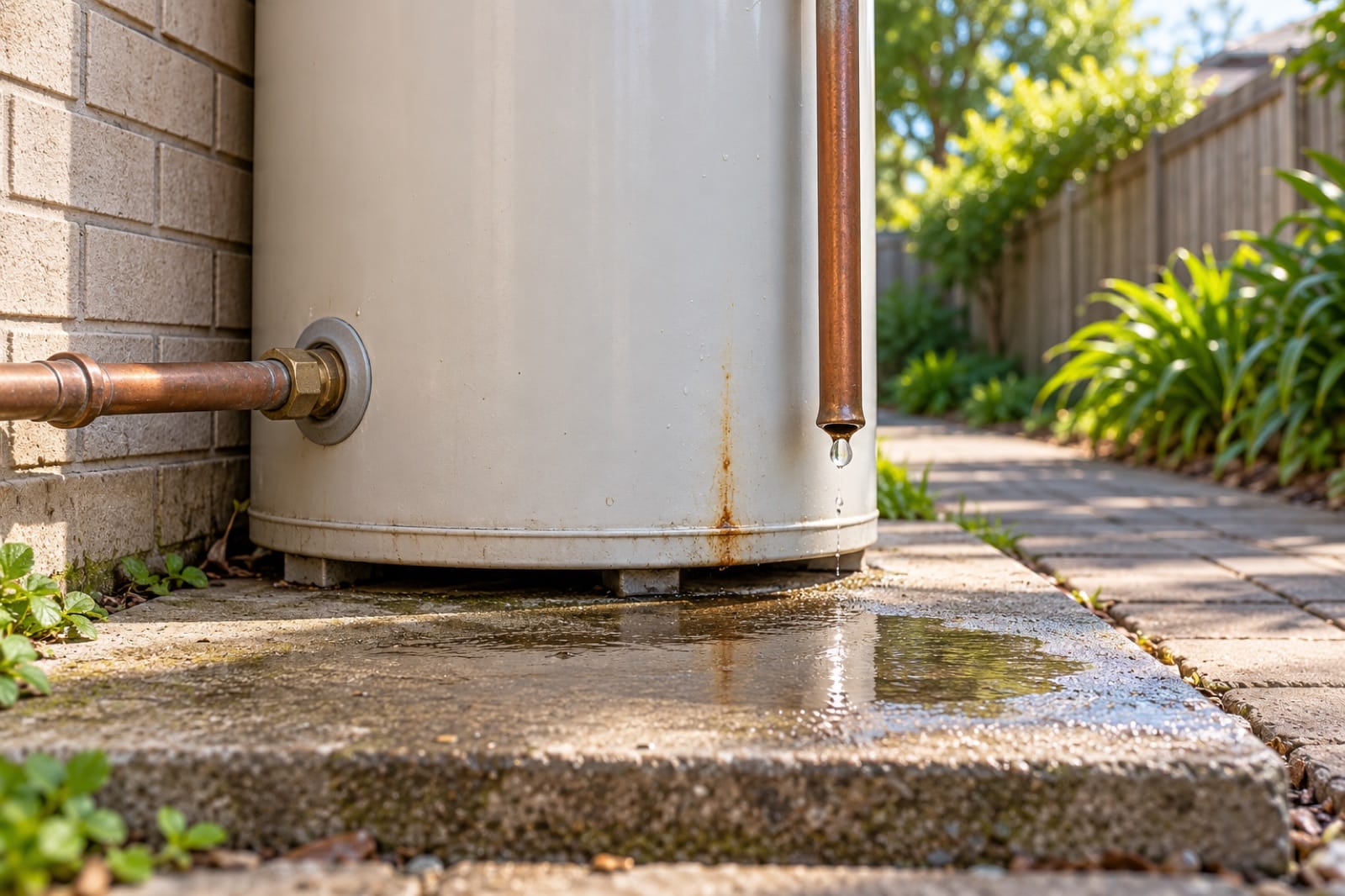
Most people only look at the water heater when the shower runs cold or there's a puddle beside the tank. A water heater leaking from the bottom is the usual surprise, and by then a slow drip may have been soaking the floor or the wall behind it for weeks, with the tank losing heat around the clock.
Short answer: A water heater leaking from the bottom usually has one of five sources: the drain valve, the relief valve's drain line, a fitting higher up, condensation or a corroded tank. Only the last one means replacement. If the leak is steady, shut off the power or gas and the cold water, then trace it from the top down.
A 20-minute check a couple of times a year catches many problems early.
Is a leaking water heater an emergency?
A slow drip you can catch in a pan can wait for a plumber's visit. A steady stream, water spreading across the floor or water near anything electrical can't. In that case:
- Turn off the heat. On an electric tank, switch off its breaker. On a gas tank, turn the control knob to off, as the label on the tank shows.
- Close the cold-water shutoff valve on the inlet pipe above the tank.
- Call a plumber. Don't drain a full tank of hot water yourself unless you know how and it has cooled.
If water has reached outlets, or you'd have to stand in it to reach the electrical panel, stay out and call an electrician.
Safety basics:
- Hot water burns. Water from a storage tank can scald in seconds. Wear closed shoes and keep your hands out of the path of any valve you open.
- Gas systems, both storage tanks and tankless units: the burner, the gas line and the flue are a job for a licensed plumber or gas technician (in most places this is required by law). If you smell gas, don't touch any switches, leave the area and call your gas supplier's emergency line.
- Electric storage tanks: don't open the element or thermostat covers. The wiring behind them is live.
- Heat pump and solar systems: the tank checks below still apply; leave the extra parts to the installer or a plumber.
1. Look before you scan (free, 5 minutes)
Use a flashlight and work from the top down, because water from a fitting at the top often runs down the jacket and shows up at the base.
- The top: the hot and cold connections and the shutoff valve on the cold inlet. Look for green or white crust, rust or drops.
- The relief valve and its drain line: the brass valve near the top, with a copper pipe running down. A mineral crust or a constant drip at the end of the pipe is worth noting.
- The drain valve: the small hose-thread valve near the bottom of the tank.
- The jacket and base: rust streaks, the base of the tank, the drain pan or floor under it and the wall nearby.
- Gas units: soot or scorch marks mean a call to a professional.
Dry everything with a rag; a fresh drip will show up again within hours.
2. What can a thermal camera show on a water heater?
A thermal camera shows the surface temperature of the jacket and the pipes, which tells you where heat escapes and where water runs. Scan when no hot water has been used for an hour or so, and for an outdoor tank, early in the morning or on a cloudy day, before the sun heats the jacket. Stand about 6 feet back to fit the whole tank in the frame, then move closer to the fittings.
| On the screen | What it usually means |
|---|---|
| Warmer at the top, cooler at the bottom | Normal: hot water rises inside the tank |
| A warm patch or band on the jacket | Thin or settled insulation there, or an access cover; heat is escaping |
| A cool vertical streak down the jacket | Water evaporating as it runs down: trace it up to the drip |
| Hot outlet pipe, warm for a short way on the cold inlet | Normal |
| Pipes still hot several feet away when no one has used water | Heat creeping out of the tank through the pipes |
| The relief drain line warm along its length | The valve is passing hot water: see step 4 |
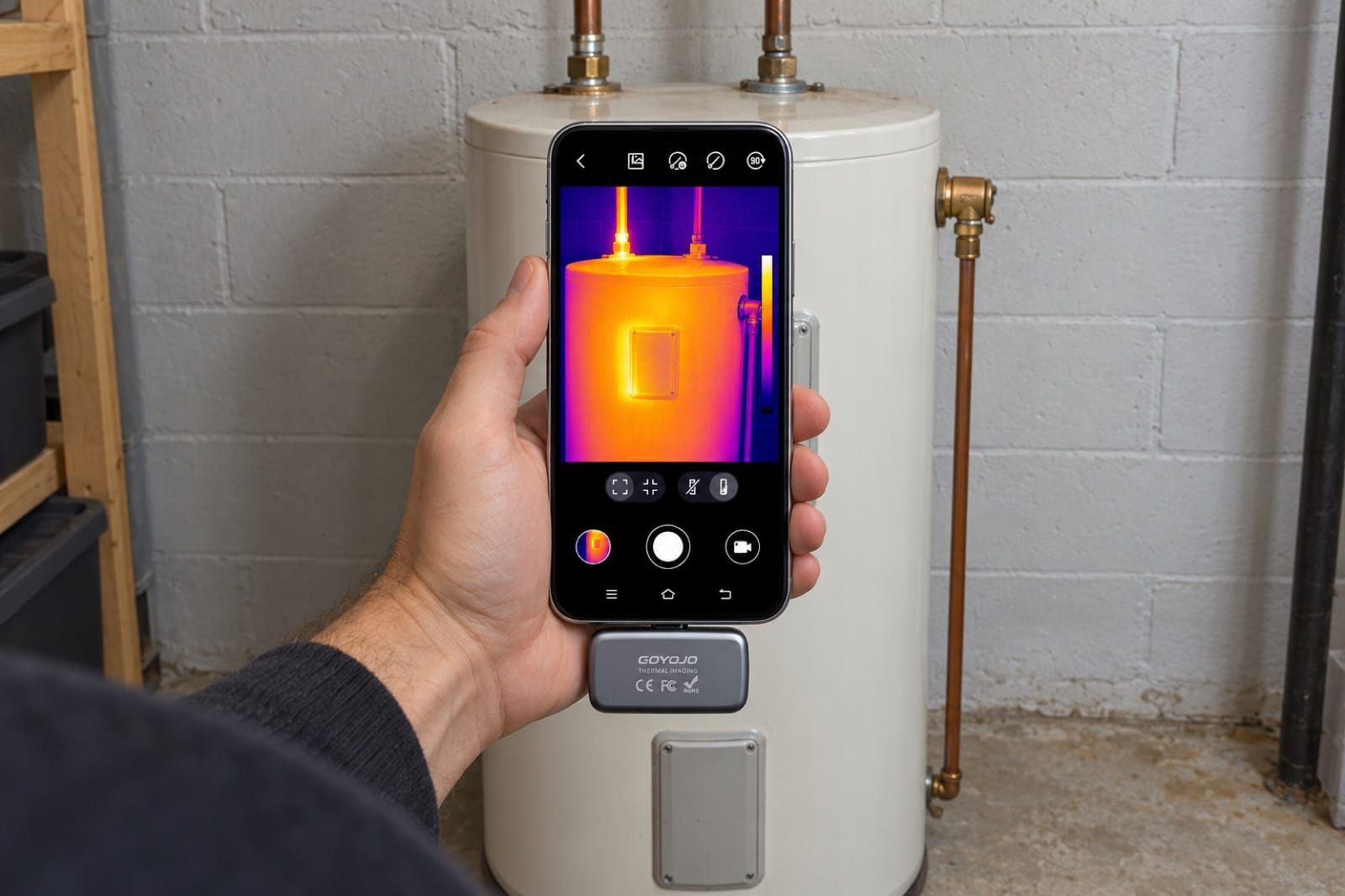
Illustration: scan the tank after an hour with no hot water use; a cool streak down the jacket points to water running from a drip above.
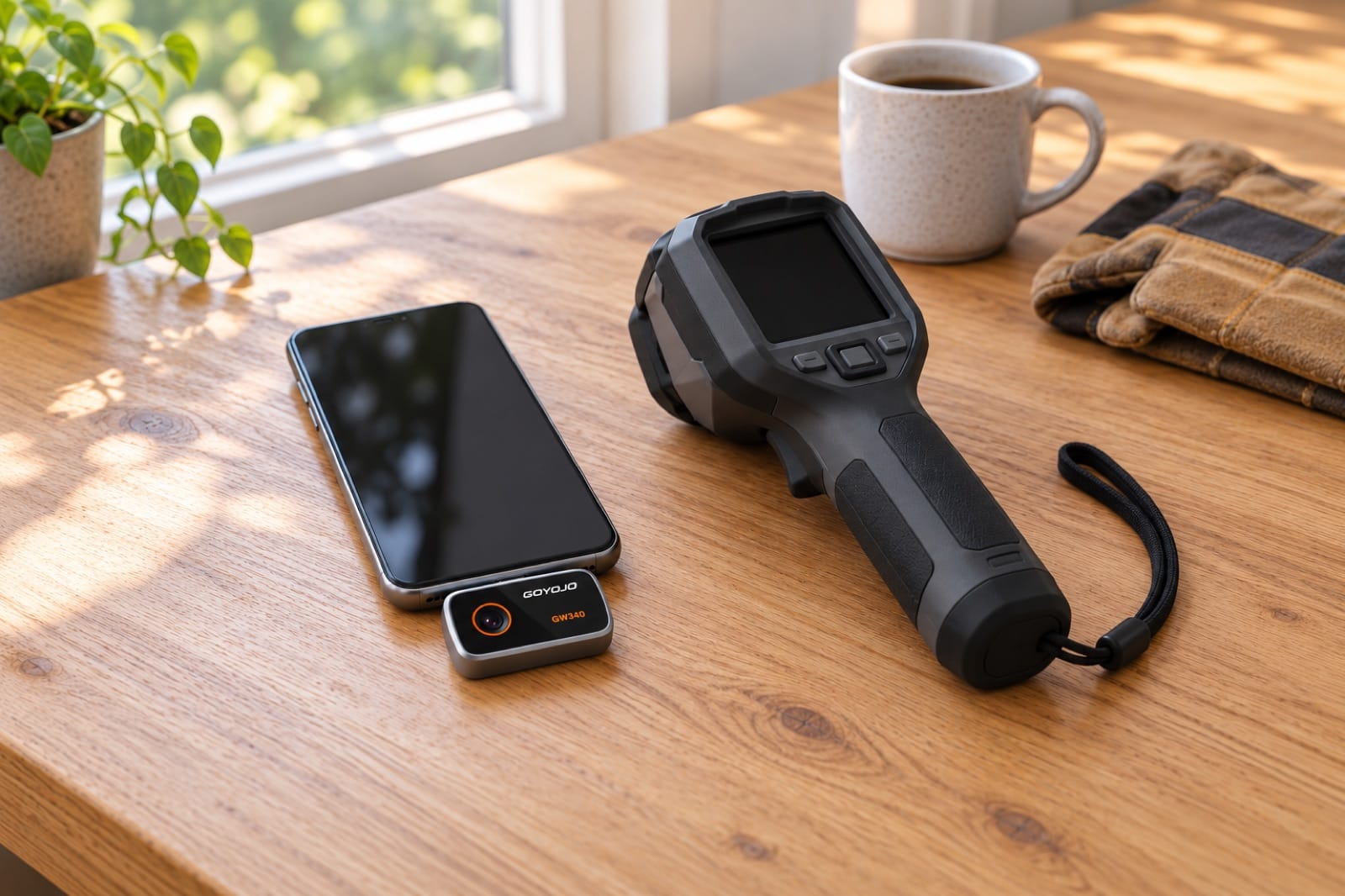
Spark Pro keeps the tank and its pipes sharp in one frame from about 6 feet back. Bare copper and shiny valves reflect heat, so read the painted jacket or a piece of masking tape stuck on the pipe (our guide to reading a thermal image explains why).
3. Why is my water heater leaking from the bottom?
Water around a water heater has five common sources, and only one of them means the tank is finished.
- The drain valve. It can weep from its spout or where it threads into the tank. A hose cap may stop a spout drip; otherwise a plumber can replace the valve.
- The relief valve. On many systems a little water from the drain line while the tank heats up is normal. A steady stream, or a drip that never stops, isn't. The line usually ends near the floor, so this can look like a tank leak.
- A fitting at the top, or the cold inlet valve. A plumber can often tighten or replace these. A water heater leaking from the top usually starts here.
- Condensation. A gas storage tank can drip when it's refilled with cold water, because water vapor from the burning gas condenses on the cold tank. It stops once the water is hot.
- The tank itself. If water seeps from under the jacket and none of the above explains it, the inner tank is usually corroded. Tanks can't be patched, and sealant only hides the problem; plan a replacement before it fails completely.
For a tank in the laundry room, basement or garage, a moisture meter shows how far the water has spread. Damp reads 5–40 mm into drywall, wood and cement (our guide to pinless moisture meters explains the readings). Take a reading on dry wall or floor well away from the tank, then move toward it in steps. Readings that climb toward the tank, or up the wall behind it, show the wet area. Mark its edge with painter's tape and check again in a few days: if it grows, the leak is active.
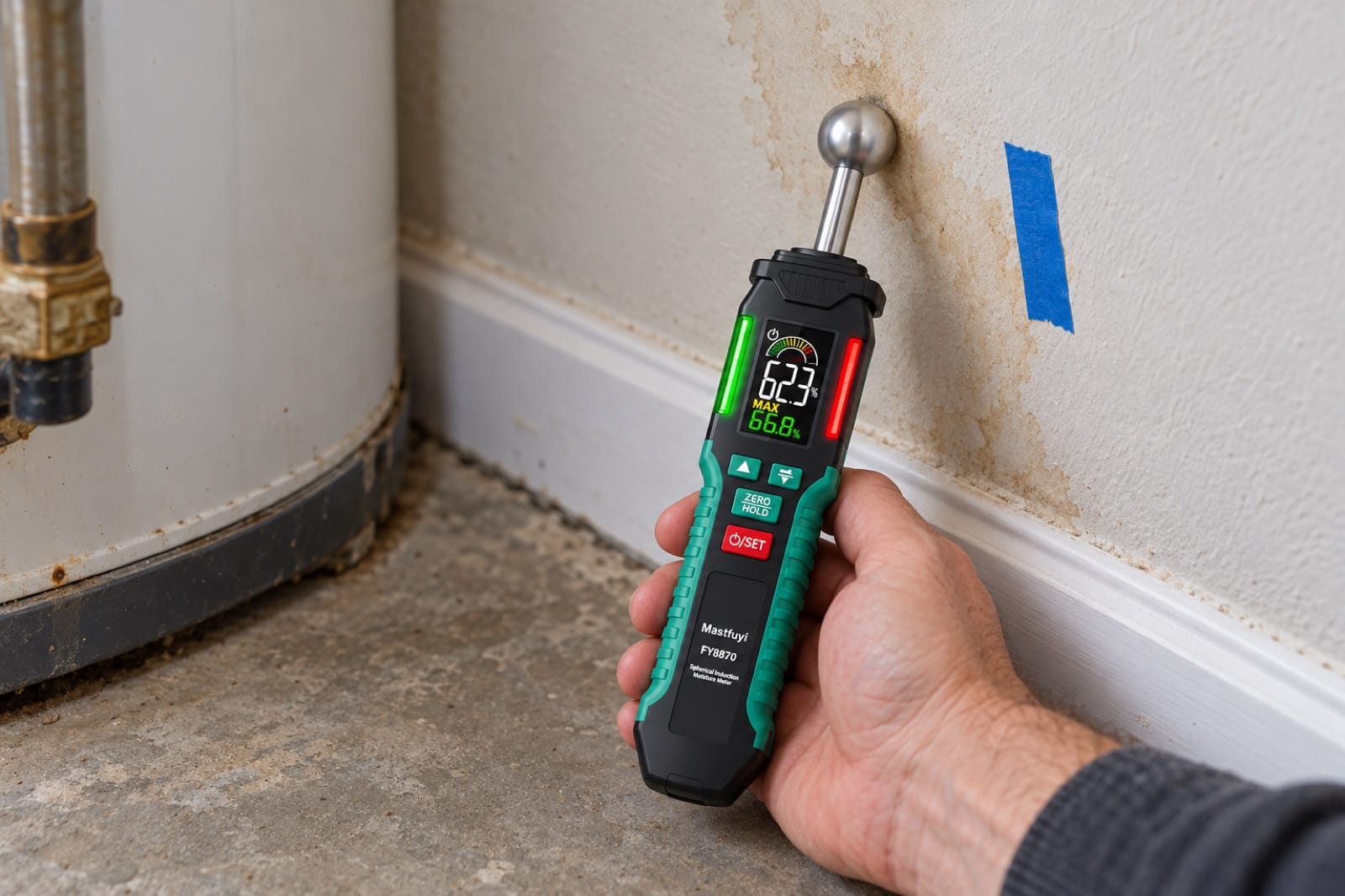
Illustration: start on dry wall away from the tank and move toward it; readings that climb show how far the water has spread.
If the wet area doesn't lead back to the tank, see how to find a water leak behind a wall.
4. How do you test a water heater relief valve?
The pressure and temperature relief valve opens if the tank gets too hot or the pressure too high, so it needs to work. Many makers recommend easing the lever every six months; the label on the tank says what yours needs.
If your system runs on gas, or you're not comfortable doing this, have a plumber do it during a service. Otherwise:
- Check the drain line. It should be connected to the valve and end close to the floor, a drain or a drain pan, where a gush of hot water can't hit anyone.
- Put a bucket or tub under the end of the pipe.
- Stand to the side. Lift the lever gently for a few seconds, then lower it back slowly.
- Watch the pipe. Water should rush out while the lever is up and stop when you let go.
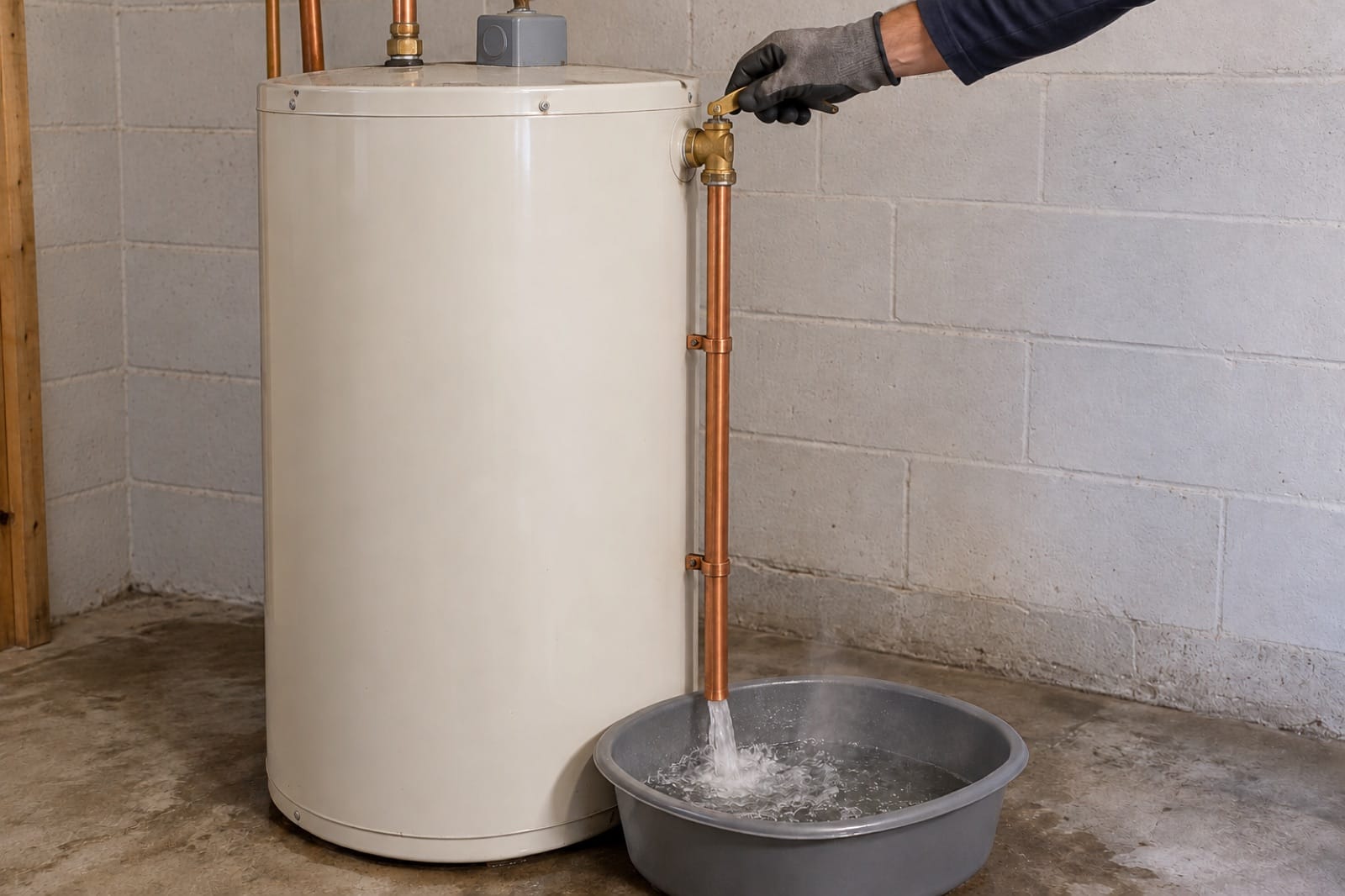
Illustration: stand to the side, lift the lever gently for a few seconds and lower it slowly; water should stop when you let go.
If it keeps running, lift and lower the lever once more to flush out grit. If it still won't open or won't stop, call a plumber to replace the valve. A valve that hasn't moved in years may not reseat, so find the cold-water shutoff valve before you start.
Never block or cap the drain line, and never remove the valve to stop a drip.
5. How do you cut the heat loss?
What the thermal camera showed you is heat you pay for around the clock.
- Insulate the pipes. Fitting foam pipe insulation on the hot outlet and the first few feet of the cold inlet is a quick job. Use insulation rated for the pipe's temperature, and for outdoor use if it's outside.
- Don't wrap the tank unless the maker allows it, and never cover the relief valve, the element covers or, on a gas tank, the burner area and flue.
- Don't turn the thermostat down just to save energy. Many storage systems are set to around 140 °F (60 °C) to control Legionella bacteria. Advice varies, so check the manual or ask a plumber first.
Scan again afterward: insulated pipes should be close to the air temperature on the outside.
What mistakes make a leak worse?
- Mopping up and forgetting about it. A small leak keeps feeding a damp wall, and that's how mold that keeps coming back gets started.
- Tightening old fittings hard. They can crack. If a gentle turn doesn't help, leave it to a plumber.
- Guessing about the back of the tank. An inspection camera for plumbing shows the wall and fittings without moving anything.
What a thermal camera can't tell you
- It can't see inside the tank, so it won't show corrosion or sediment.
- It doesn't see water, only the cooling that evaporating water causes.
- It can't tell whether a gas system burns and vents safely. Only a licensed professional can check that.
Frequently asked questions
What are the signs of a failing water heater?
Rusty or discolored hot water, popping or rumbling while it heats, less hot water than before, and rust or water around the base are the usual signs. Age matters too: tanks often last roughly 10 to 15 years, and ENERGY STAR advises planning a replacement once a heater is over 10 years old. The label or serial number often shows the date.
How long will a water heater last after it starts leaking?
There's no reliable timeline. A leaking valve or fitting can be fixed, and the tank may carry on for years. A leak from a corroded inner tank only gets worse and can turn into a sudden failure, so if that's the likely source, arrange the replacement now.
Can I take a shower if my water heater is leaking?
With a slow drip from a tank that still works, a quick shower doesn't usually add danger, though every hot water draw refills the tank and feeds the leak. Skip it if the flow is steady, water is near anything electrical or you smell gas, and ask a plumber.
Why is my water heater leaking but I still have hot water?
Most leaks don't affect heating. A valve or fitting can drip for months while the tank works normally, and even a corroded tank keeps making hot water until it fails. Having hot water says nothing about how serious the leak is, so trace it to its source.
Can a tankless water heater leak from the bottom?
Yes. A tankless unit has no tank to rust through, but its water connections, pressure relief valve and, on condensing gas models, condensate line can all drip. Water and live or gas parts sit close together inside the case, so leave the cover on, shut it off and call a plumber.
The tools in this guide
Prices are on each product page, in your local currency.
- Spark Pro — shows heat loss from the tank, warm pipes and a weeping relief line in one frame from a couple of meters back.
- Damp — pinless moisture meter to map how far water has spread into the floor and walls.
- Spark — the same app and colors, for checking pipes and fittings up close.
The Whole Home Kit adds the Reach 360 inspection camera to Spark Pro and Damp, for looking behind the tank and into tight spaces, for 10% less than buying them separately.
Catch the drip before it becomes a flood. Order Spark Pro, or get the Whole Home Kit to find heat loss, map the water and look behind the tank.