Home check before you buy or rent
A viewing lasts twenty minutes and the problems that cost the most are the ones you can't see: water inside a wall, missing insulation, wiring that runs hot. Here's what to look at, in the order we'd do it, and when to call a pro.
Get the printable checklist. One page, room by room, with boxes to tick and the questions to ask the seller or landlord. Get it free by email →
Start outside
Most water problems start at the outside of the house, so walk around it first.
- Ground and gutters. The ground should slope away from the walls, and downspouts should carry water well away from the foundation. Puddles against the wall end up in the basement.
- Foundation. Hairline cracks are common. Cracks wider than ¼ in, or stair-step cracks in block and brick, are a reason to ask a structural engineer.
- Roof and siding. From the ground, look for missing or curling shingles, a sagging ridge, soft trim and peeling paint around windows.
- Mud tubes running up the foundation are a sign of termites.
Follow the water
Water damage is the problem that hides best and costs the most. Check every place water is used or could get in.
- Under every sink: stains, a soft or swollen cabinet floor.
- Toilets: a base that rocks, a soft floor around it.
- Ceilings below bathrooms and under the roof: stains, bubbling paint, fresh patches of paint.
- Basement: a musty smell, white powder or tide lines on the walls, rust at the base of the water heater.
- The wall behind the shower. A moisture meter or a thermal camera shows a damp patch long before the paint does. Wet drywall usually reads cooler than the dry wall around it.
More on this: how to find a water leak behind a wall.
Drafts and insulation
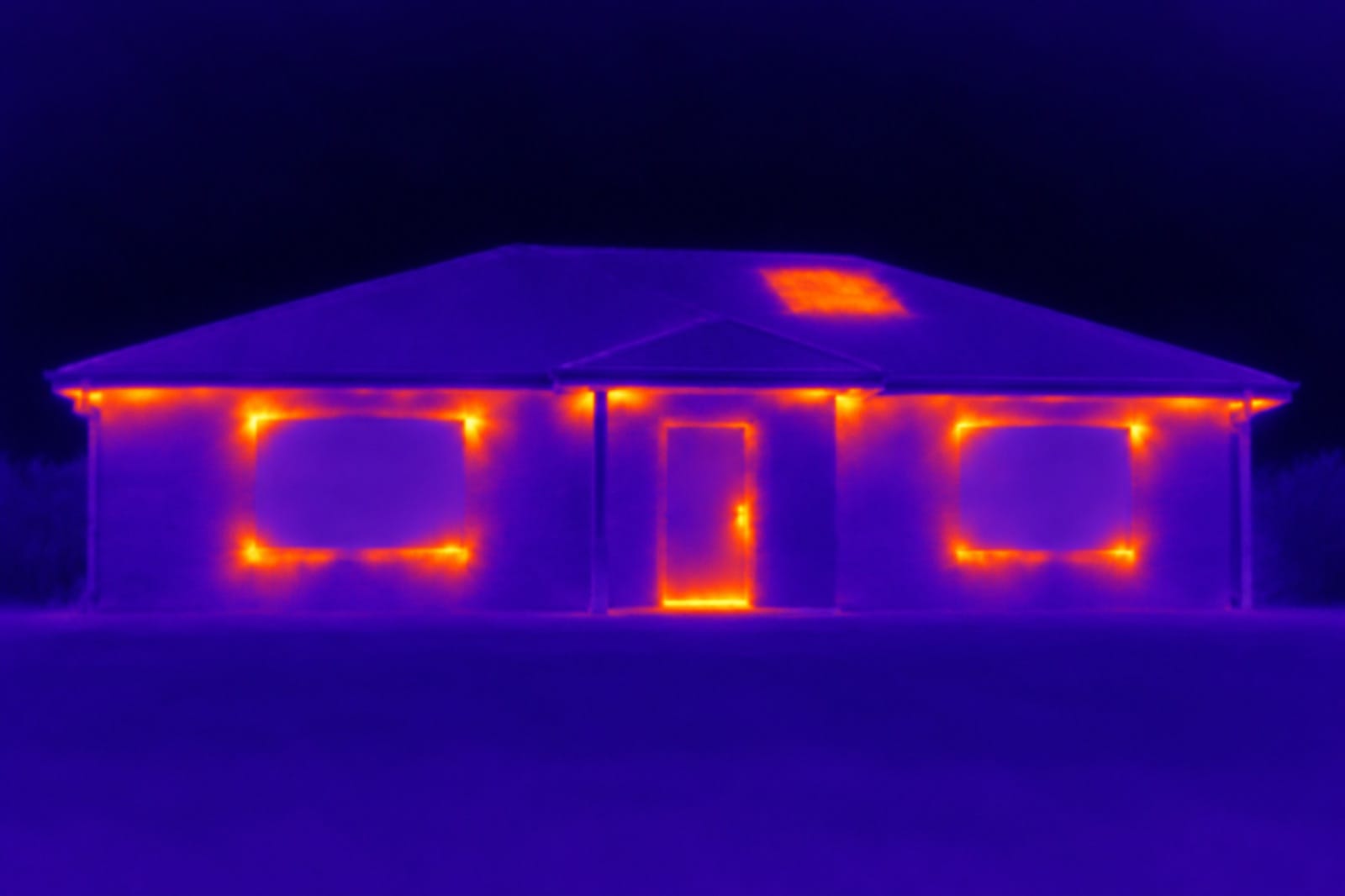
Run the heat or the air conditioning and stand next to the windows, doors and outlets on the outside walls. You can often feel a draft. With a thermal camera you can see it — and see missing or slumped insulation as a patch that's warmer or colder than the rest of the wall. It works best when it's at least 18 °F (10 °C) warmer or colder outside than inside.
In the attic, insulation should be spread evenly with no bare patches, and the bathroom and kitchen fans should vent outside, not into the attic.
Wiring
- No outlets or switches warm to the touch, no scorch marks, no buzzing.
- Outlets near water should be GFCI (the ones with test and reset buttons).
- Two-prong outlets often mean old wiring. Ask whether it's been updated.
- Extension cords running through the house mean there aren't enough outlets.
A thermal camera shows an outlet, breaker or power strip running hotter than the others — see hot outlets and power strips. Anything warm goes to a licensed electrician.
Heating, cooling and safety
- Every room warms up and cools down; every vent blows.
- Ask the age of the furnace or heat pump, the water heater and the roof.
- Smoke alarms on every floor; a carbon monoxide alarm if there's gas, oil or an attached garage.
- Railings on stairs, decks and balconies are solid.
Renting: protect your deposit
On move-in day, take a dated photo or video of every room, write down every existing mark, stain and crack, and send the list to the landlord. Photograph the meter readings. Ask who to call for leaks and repairs.
When to call a pro
This check helps you spot problems early and ask the right questions. It doesn't replace a licensed home inspection before you buy. Get a specialist for wide foundation cracks or sloping floors, warm outlets or an old panel, damp you can't trace, and any sign of termites.
Take the list with you. The printable version has every check above with boxes to tick, plus the questions to ask before you sign. Get the checklist →