Thermal imaging home inspection: a 20-minute check when buying or renting
An open house lasts half an hour, there are ten other people walking through, and the walls have just been painted. A rental showing is even quicker. It's hard to tell in that time whether the bathroom has a leak or the ceiling has no insulation, and that's where a quick thermal imaging home inspection of your own earns its place.
Short answer: A thermal imaging home inspection shows surface temperature, so it can reveal damp walls, missing insulation and possible roof leaks that fresh paint hides. It can't see through walls or prove what's wrong. Use a 20-minute scan to shortlist houses and brief your inspector, not to replace a licensed inspection.
A licensed home inspection is still the right way to check a house before you buy. But a 20-minute check of your own helps you decide which houses are worth paying an inspector for, and what to ask them to look at. For renters, it gives you photos for the move-in condition report.
Is thermal imaging worth it for a home inspection?
Often, yes, as long as you know what you're paying for or doing. Many home inspectors now carry a thermal camera, and some offer an infrared scan as an extra. Its value is that it covers a whole wall or ceiling at a glance and shows differences the eye can't: a wet patch under new paint, a gap in the insulation, a warm spot on a panel cover.
It's most useful in an older house, a recently flipped or freshly painted one, or anywhere you've seen a stain. It's least useful on a mild day with the windows open, when there's little temperature difference to work with. And every result is a question, not an answer: a thermal image shows where to look next.
If you want the short version on paper, our home inspection checklist before you buy or rent sums up what to bring and what to look for.
Before you go
- Ask the agent if you can use a thermal camera and a moisture meter during the showing. They're non-invasive and most agents don't mind, but ask anyway.
- Pick the right time if you can. A hot afternoon or a cold morning makes problems easier to see than a mild day.
- Charge your phone and open the camera app once at home, so you're not setting it up at the front door.
Don't drill, lift or take anything apart in someone else's home. Everything below uses what's already open.
1. Wet areas first (8 minutes)
Bathrooms, the laundry room and the kitchen are where the most expensive problems hide, and where a fresh coat of paint does the most hiding.
- Scan the walls around and behind the shower, especially the bottom 20 inches and the corners. A failed waterproofing membrane leaves a cold, damp band low on the wall or on the other side of the wall in the next room. Our guide to checking a shower for leaks covers this in more detail.
- Scan the floor in front of the shower, toilet and vanity.
- Run the hot water for a minute if you're allowed, and scan the wall behind it.
- In a two-story house, scan the ceiling under the upstairs bathroom.
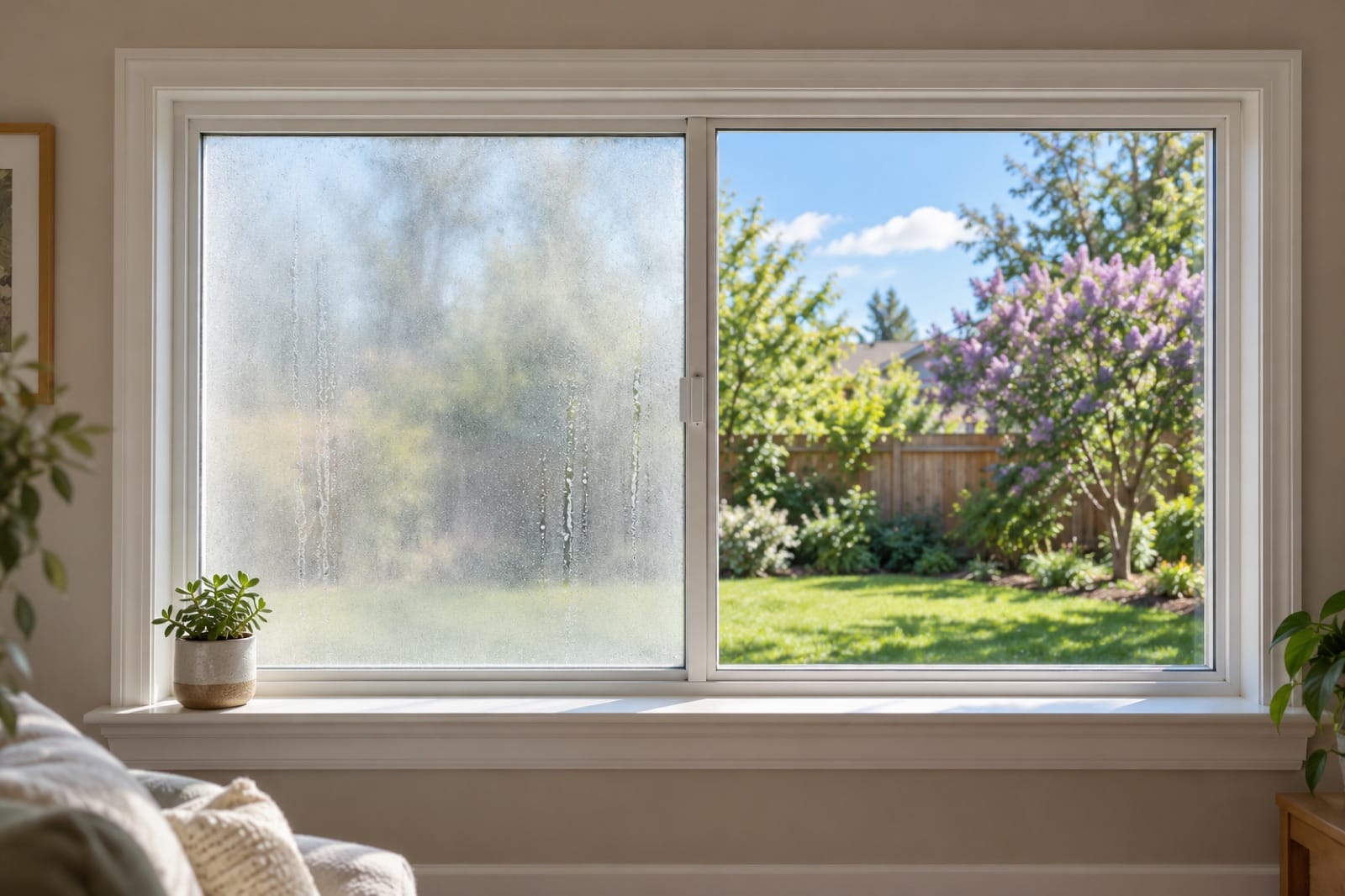
Fresh paint can cover a stain. It doesn't change the temperature of a wet wall, which is why a thermal camera often finds what the eye misses.
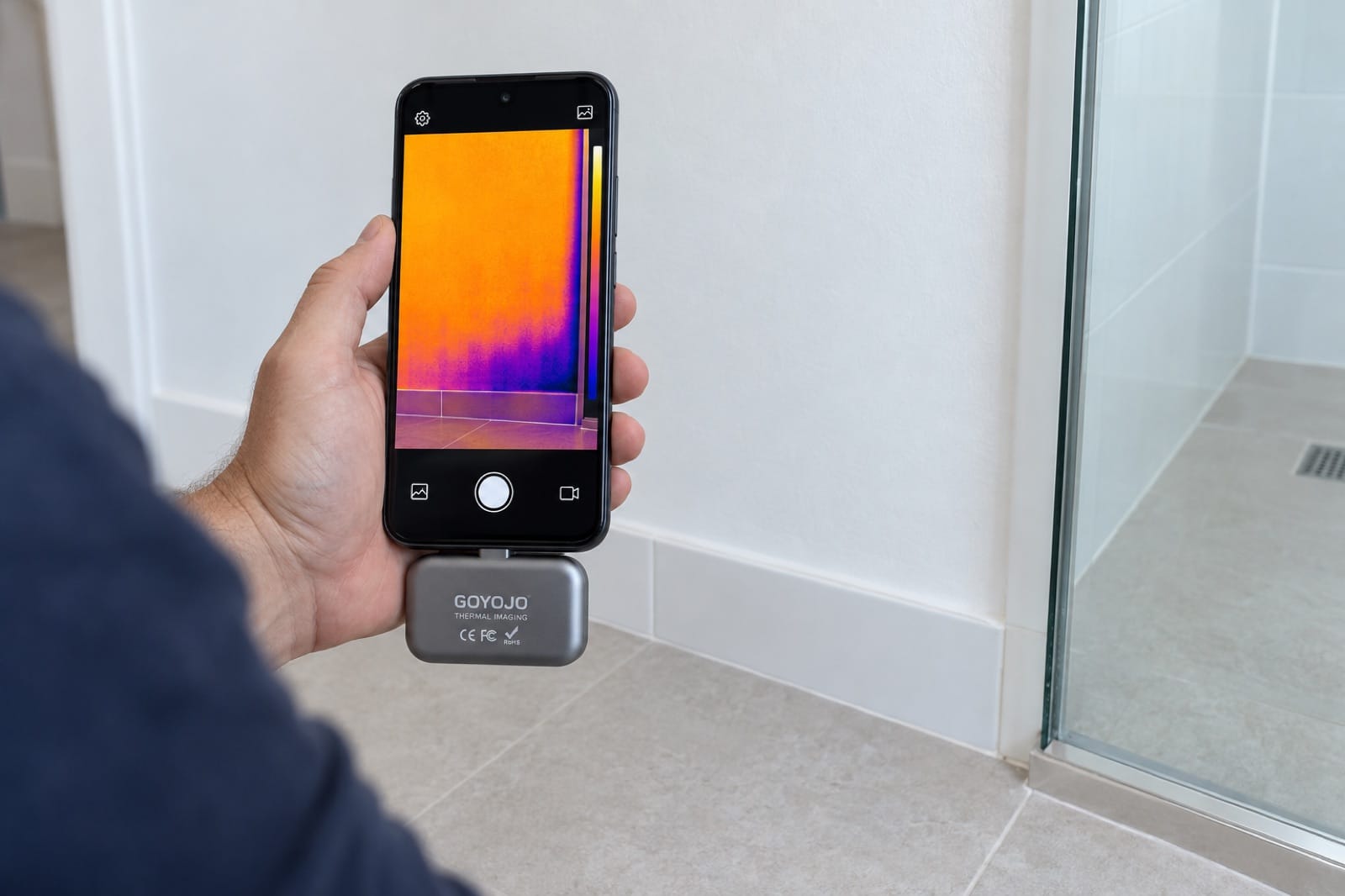
Illustration: fresh paint hides the stain, but not the temperature of a wet wall.
2. Confirm with a moisture meter (2 minutes)
A cold patch can be damp, a missing piece of insulation, or just an exterior wall. A moisture meter tells you which.
Press a pinless meter like Damp on a dry part of the same wall, then on the cold patch. A reading much higher than the dry area, low on a wall next to a shower, is something to put in writing to the home inspector. Take a photo of the reading and the spot.
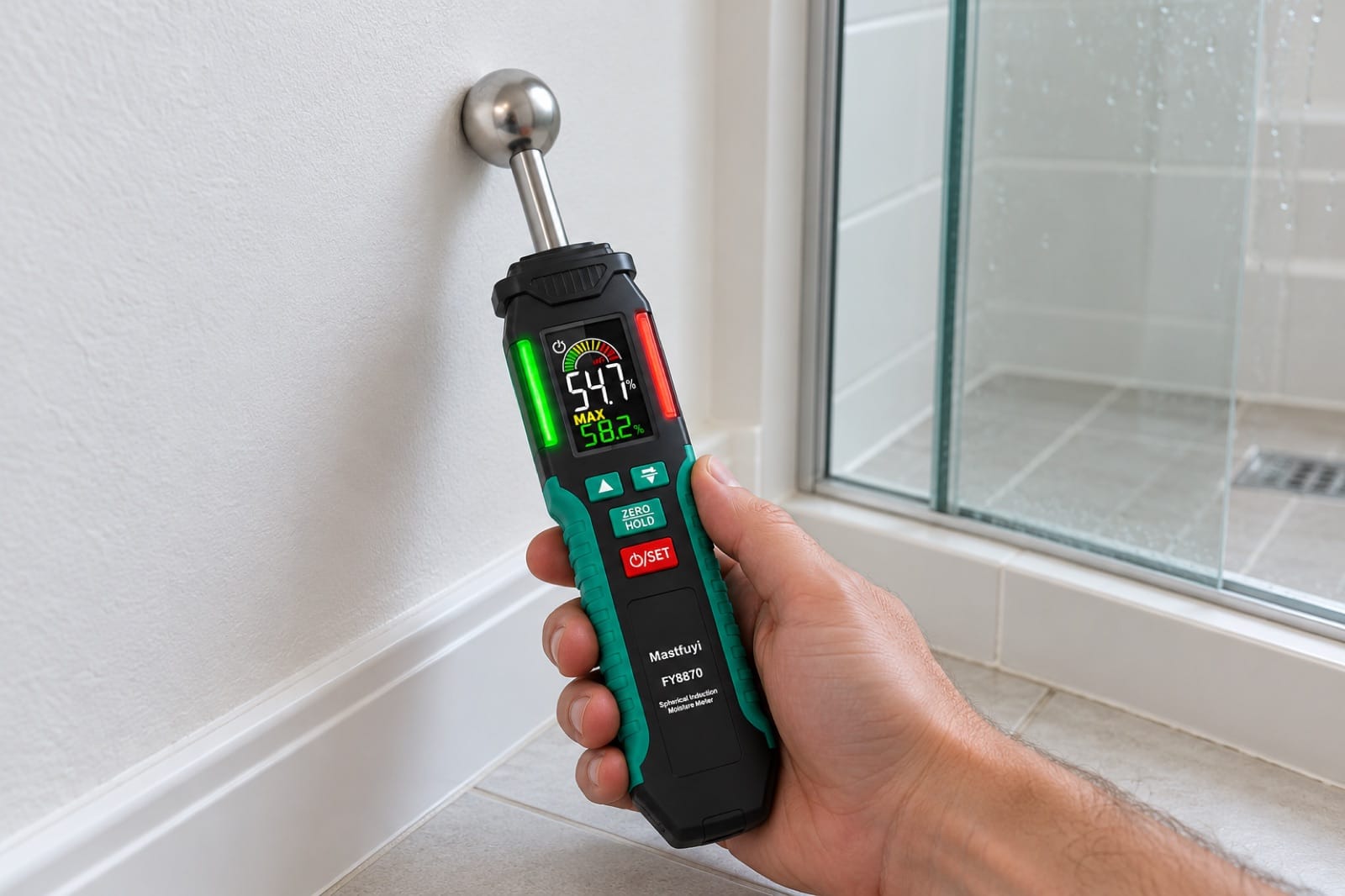
Illustration: the meter confirms the cold band is wet, not just cold. Photograph the reading and the spot for the inspector.
3. Ceilings and insulation (4 minutes)
On a hot afternoon, a ceiling with good insulation looks even. Missing or shifted batts show up as sharp-edged hot rectangles; on a cold morning they show as cold ones.
Also look for:
- Patches around recessed lights that are hotter or colder than the rest of the ceiling.
- Dark rings or cool patches near the edges, under gutters and around roof penetrations, which can mean a roof leak.
- Stains that have been painted over, which often still show as a different temperature.
Adding insulation is usually a manageable job, but it's good to know before you make an offer, and as a renter it gives you an idea of what your energy bills will be like.
4. Look under and behind (3 minutes)
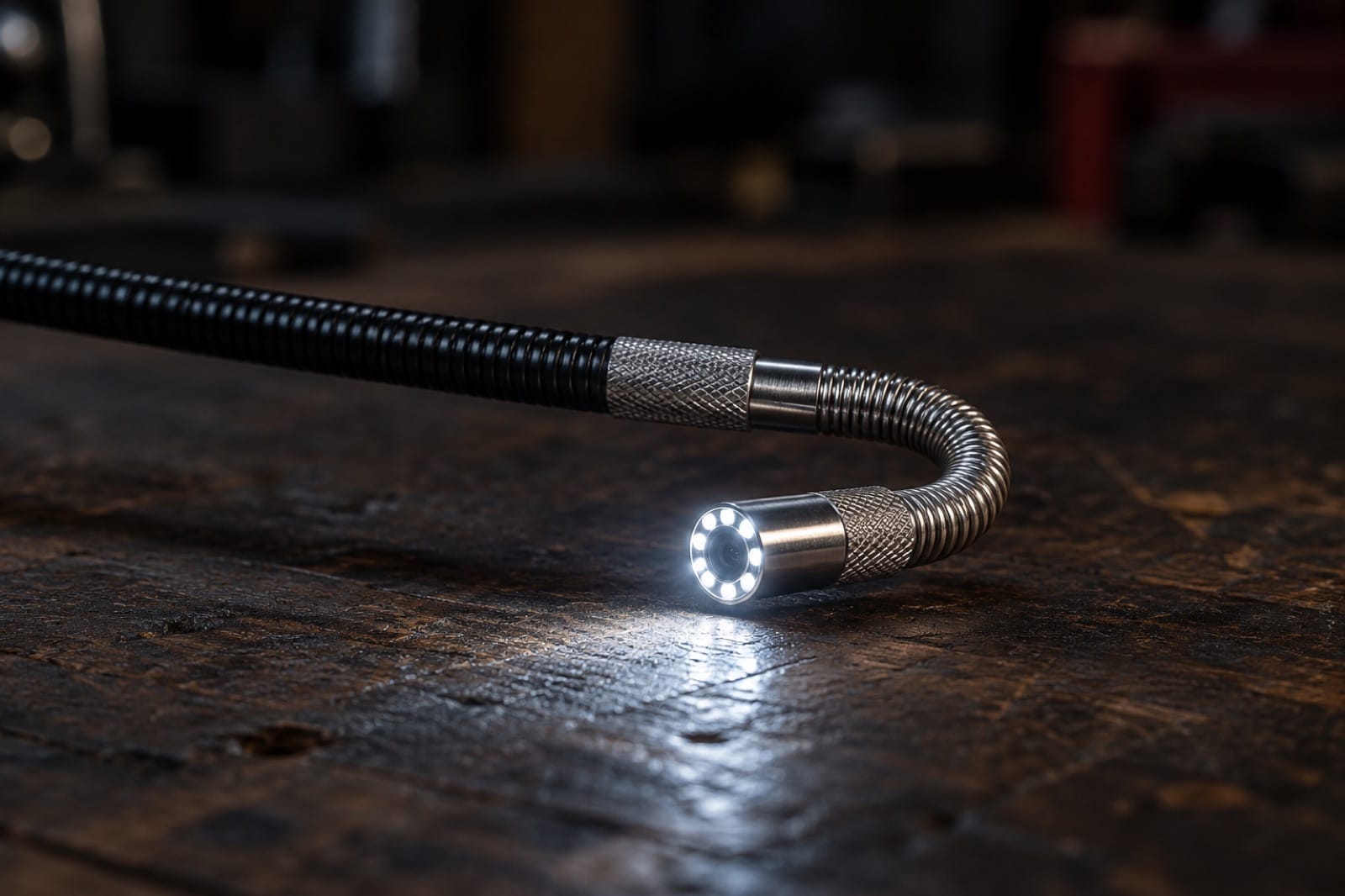
Open the cabinet under the kitchen sink, the laundry tub cabinet and the vanity. With an inspection camera you can see the back wall, the floor and the pipe joints without moving the owner's things.
- Reach Duo has a camera that looks ahead and one that looks to the side, so you can see the back of a cabinet without bending the cable. It also works with older iPhones.
- Reach 360 has a tip that bends up to 180° each way, to look up behind a sink or around a corner.
Look for swollen particleboard, dark stains, rust on the pipe fittings and white or green crust on copper joints.
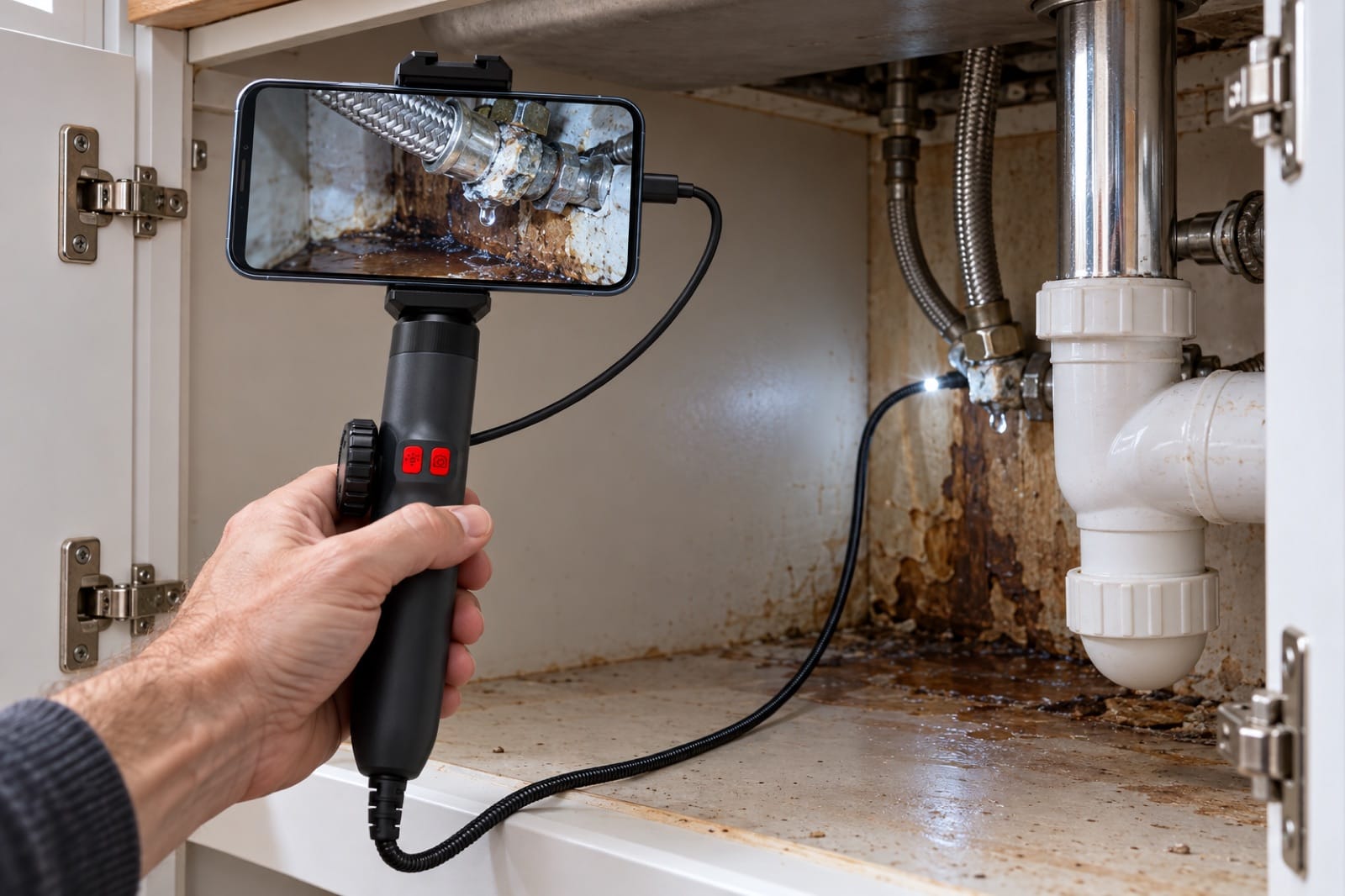
Illustration: no need to move the owner's things — the camera shows the back corner of the cabinet.
5. The outside and the electrical panel (3 minutes)
- Outside walls: soil or garden beds piled above the foundation or the weep holes, downspouts that empty against the wall, and cracks in the brick.
- The electrical panel: open the outer door only, and look. Old screw-in fuses, and no breakers or outlets with a "TEST" button, usually mean the wiring is old.
- The water heater: water pooling underneath or rust on the tank.
How do you read what the camera shows?
| What you see | What it could be | Next step |
|---|---|---|
| Cool band low on a wall near a shower | Damp from failed waterproofing | Moisture meter, then the inspector or a plumber |
| Sharp-edged rectangle on a ceiling | Missing or shifted insulation | Ask the inspector to check the attic |
| Cool blotch on a ceiling, near the edge | Possible roof leak, or simply missing insulation | Moisture meter, then a roofer if it's wet |
| Warm patch on a wall or floor with no fixture nearby | Hot water pipe, possibly a leaking one | Ask the inspector or a plumber |
| One outlet, or part of the panel cover, warmer than the rest | Heavy load or a loose connection | Ask a licensed electrician |
Shiny surfaces, such as tile, mirrors and glossy paint, reflect heat like a mirror reflects light, so what looks like a warm patch can be your own body. Move to one side and see if it moves with you. Our guide to reading a thermal image has more on this.
What should you do with what you find?
If you're buying: book a licensed home inspection and a termite inspection. Send the inspector your photos and the spots you marked. A problem you found is a reason to ask more questions, renegotiate or walk away, not a reason to skip the inspection.
If you're renting: your landlord or property manager will usually give you a move-in condition report. Add photos of anything you found, thermal and normal, and return it within the time your local rental rules allow. It helps protect your security deposit when you move out. Check your local rental rules too: many of them treat damp caused by the building itself as something the landlord has to fix.
What else should you check when buying a house?
A thermal camera only covers part of what matters. While you're there, and without any tools:
- Look at the roofline and gutters from the street: sagging, missing shingles, overflow stains.
- Open and close doors and windows. Ones that stick, along with cracks running from door corners, are worth asking about.
- Run the faucets and watch the water pressure and how fast the drains clear.
- Use your nose. A musty basement or a strong air freshener in one room are both worth a question. Our guide to why mold keeps coming back explains what's usually behind it.
- Ask for the age of the roof, the water heater and the heating and cooling system, and for any seller disclosures your area requires.
What are the downsides of thermal imaging?
- It won't find termites in a wall that shows no moisture or warmth.
- It won't tell you the structure is sound, the roof is safe or the wiring is up to standard.
- On a mild day with the windows open, many problems simply won't show.
- It can raise false alarms: a cold patch may be nothing more than an exterior wall or a reflection.
It's a quick first look, not a verdict. Its value is that you walk out with photos instead of a feeling.
Frequently asked questions
How much does a thermal imaging inspection cost?
It varies with the size of the house, your area and the inspector, so get a quote. Some inspectors include a thermal scan in a standard home inspection, and others charge it as an add-on. Ask what the scan covers, whether the inspector is trained in thermography, and whether the findings appear in the written report. A scan of your own costs only the price of the camera, but it gives you no report.
Will thermal imaging see through walls?
No. A thermal camera only reads the temperature of the surface it's pointed at. What's behind a wall shows up only if it changes that surface temperature, as a hot pipe or a wet patch can. Dense or thick walls, and problems with no temperature effect, stay invisible. That's why you follow up a thermal scan with a moisture meter or an inspection camera.
What is the biggest red flag in a home inspection?
There's no single one, but water is the problem to take most seriously, because it damages structure, feeds mold and often points to a roof, plumbing or drainage fault. Other big ones are foundation movement, old or unsafe wiring and a roof near the end of its life. Fresh paint in just one corner of a ceiling is also worth a question.
What should I ask a home inspector about thermal imaging?
Ask whether they use a thermal camera on every job or only as an extra, whether they have thermography training, and which conditions they need for a good scan. Then ask how the results appear in the report, and whether they confirm suspicious patches with a moisture meter. Also tell them what you found yourself, so they can check those spots first.
Should I buy or rent a thermal camera for house hunting?
If you're only looking at one or two houses, renting can make sense, though the camera may not be available when you need it. If you're viewing several houses, or you'll want to keep checking your home after you move in, buying usually works out better. Our guide on whether to rent or buy inspection tools goes through the trade-offs.
The tools in this guide
Prices are on each product page, in your local currency.
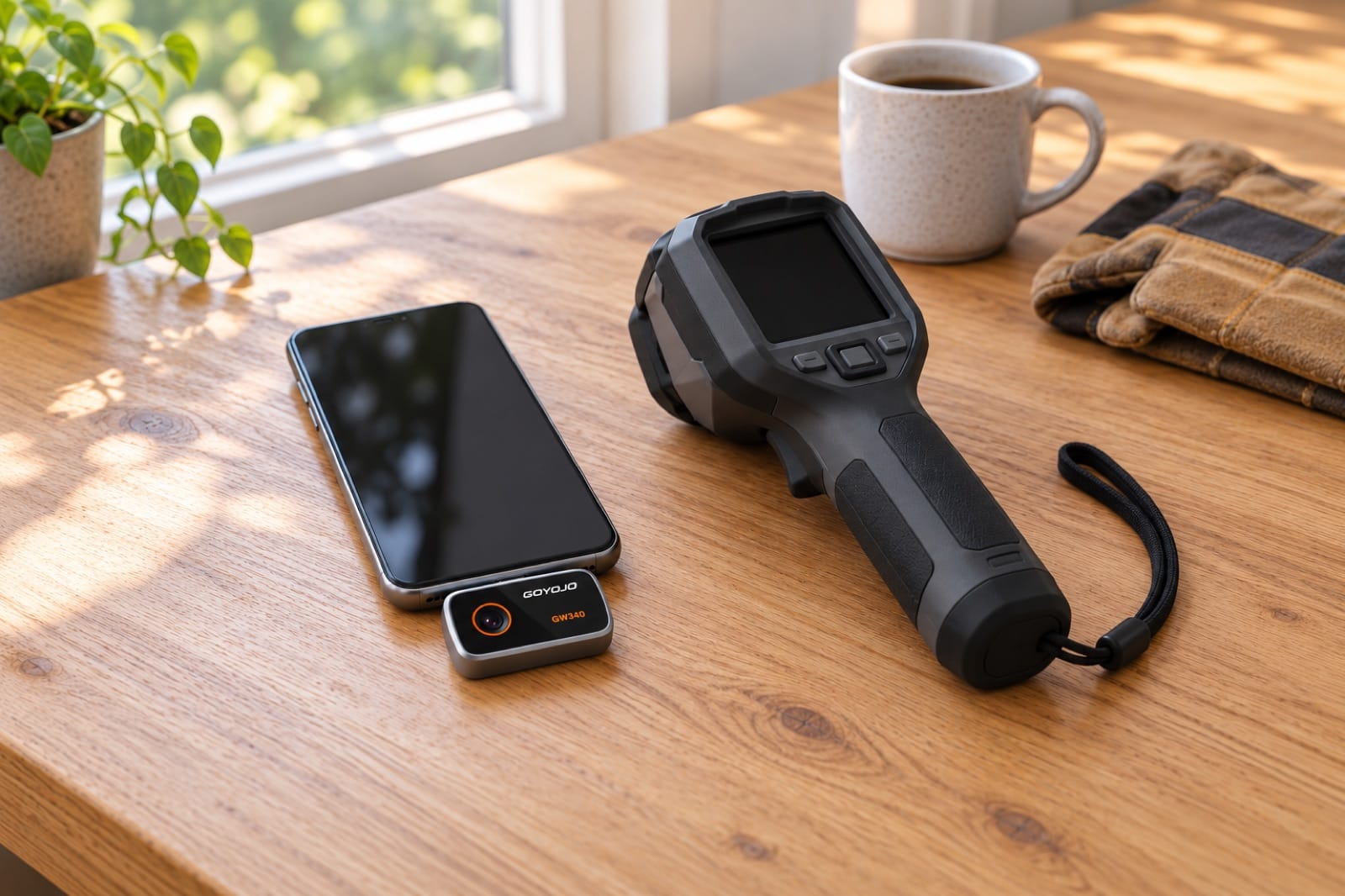
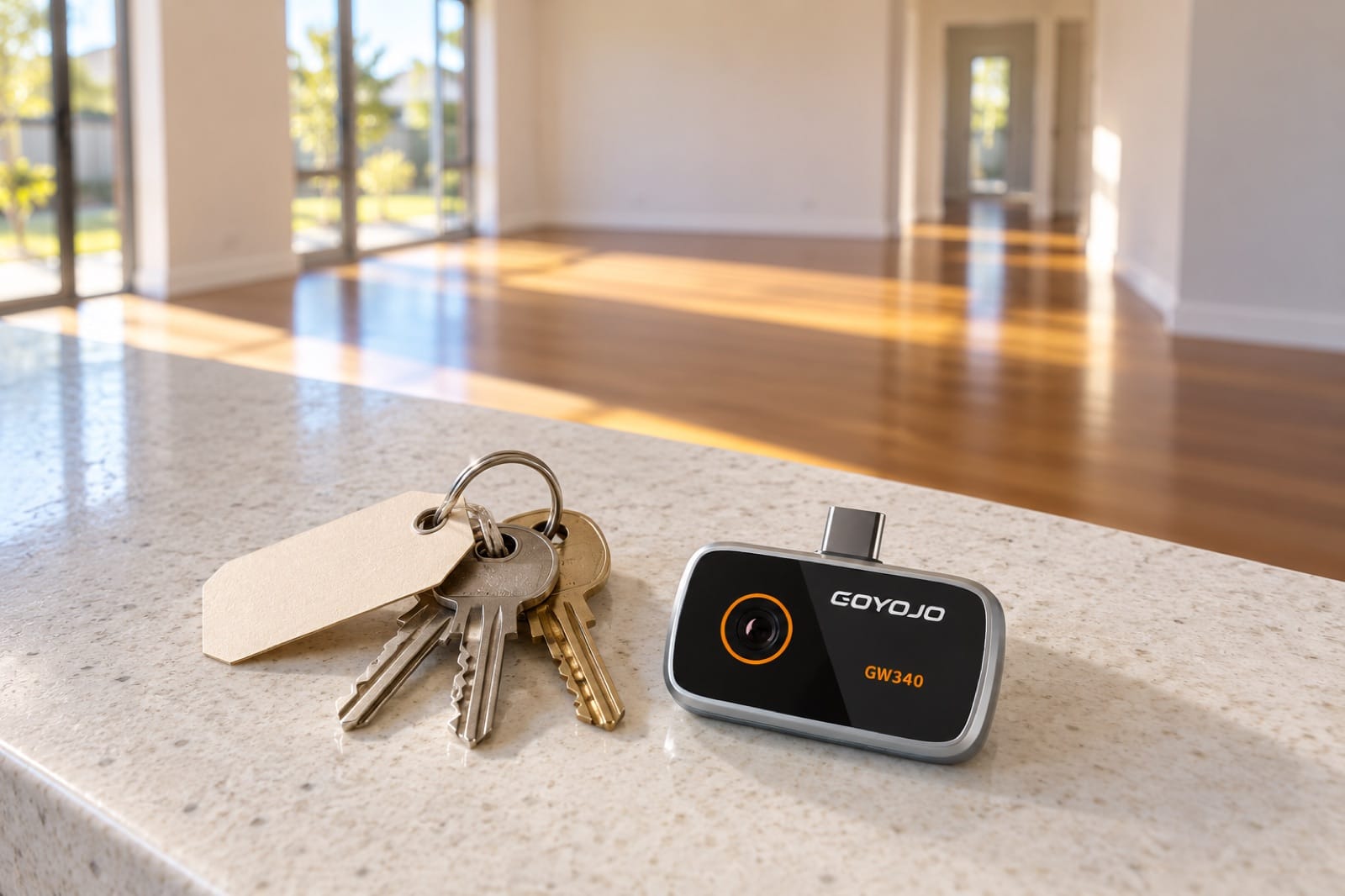
- Spark Pro — sees a whole bathroom wall or ceiling from a couple of meters back, which matters in a 20-minute open house.
- Damp — pinless moisture meter, no holes in someone else's wall.
- Reach Duo — inspection camera with a front and a side camera, for under sinks and behind cabinets.
- Reach 360 — a steerable tip to look around corners.
Spark Pro, Damp and Reach 360 together are our Whole Home Kit, for 10% less than buying them separately.
Ready to see it for yourself? Order Spark Pro before your next open house, or get the Whole Home Kit if you want all three tools.